


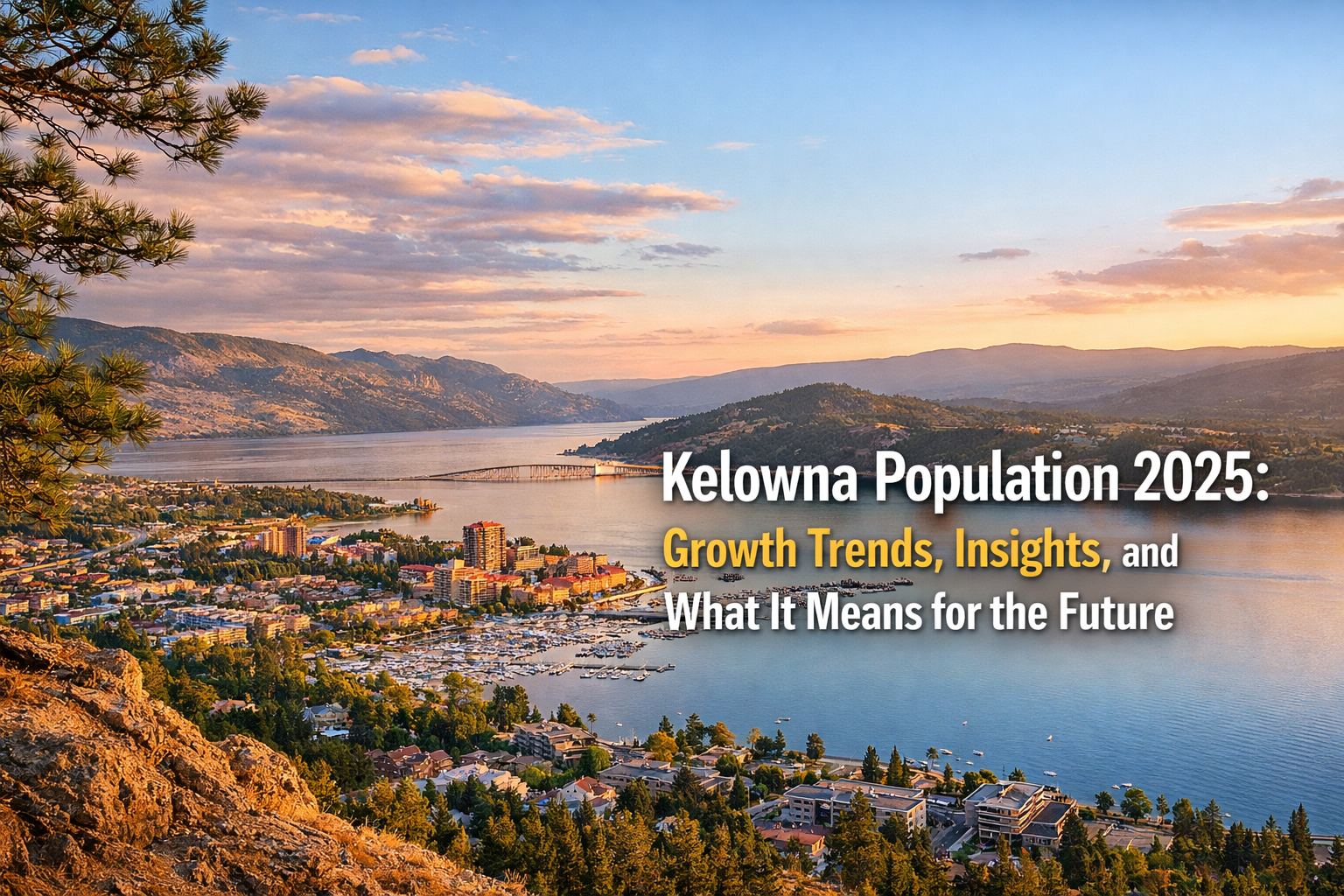
Kelowna has quietly transformed into one of Canada’s most dynamic mid-sized cities. Known for its scenic lakes, vineyards, and lifestyle appeal, it’s also becoming a magnet for new residents. If you’re searching for accurate, meaningful insight into kelowna population 2025, this guide goes far beyond a simple number. It explores how the city is growing, why people are moving there, and what that growth means for residents, investors, and policymakers.
Whether you’re considering relocating, investing in property, or simply curious about demographic trends, understanding Kelowna’s population in 2025 requires context—not just statistics.
Quick Facts: Kelowna Population 2025
| Category | Details |
| Estimated Population (2025) | ~165,000 – 170,000 |
| Population (2021 Census) | 144,576 |
| Growth Rate (2021–2025 est.) | ~3–4% annually |
| Province | British Columbia |
| Region | Okanagan Valley |
| Median Age | ~43 years |
| Key Growth Drivers | Migration, lifestyle appeal, remote work |
| Urban Area Population | ~235,000+ (Central Okanagan) |
| Status | One of Canada’s fastest-growing mid-sized cities |
Understanding Kelowna’s Population Growth

The kelowna population 2025 estimate reflects consistent and accelerating growth rather than a sudden spike. Over the past decade, Kelowna has evolved from a seasonal tourism hub into a year-round urban center with a diversified economy.
Population growth in Kelowna is largely driven by migration rather than natural increase. This means more people are moving into the city than are being born there. This trend is significant because it shapes housing demand, infrastructure planning, and local services.
From 2016 to 2021, Kelowna saw one of the highest growth rates in British Columbia. That momentum has continued into 2025, fueled by a combination of economic opportunity and lifestyle advantages.
Why Kelowna Is Growing So Fast
A Lifestyle That Attracts Canadians
Kelowna offers something rare in Canada: a blend of urban convenience and outdoor living. With Okanagan Lake, ski resorts, hiking trails, and wineries, the city appeals to both young professionals and retirees.
Many Canadians relocating from larger cities such as Vancouver, Calgary, and Toronto are drawn by:
- Lower population density
- Access to nature
- A slower pace of life
- A growing cultural and food scene
This lifestyle shift has become even more pronounced since remote work gained popularity.
Remote Work Has Changed Everything
One of the most important drivers behind the kelowna population 2025 increase is the rise of remote work. Professionals who once needed to live in major metropolitan areas are now choosing cities like Kelowna.
This shift has brought:
- Higher-income households into the region
- Increased demand for housing
- Growth in local entrepreneurship
Kelowna has effectively positioned itself as a “lifestyle city” for remote workers, which continues to influence population growth patterns.
Strong Economic Expansion
Kelowna’s economy is no longer dependent on tourism alone. It has diversified into sectors such as:
- Technology
- Healthcare
- Education
- Construction and real estate
The presence of institutions like UBC Okanagan has also contributed to population growth by attracting students and academic professionals.
A stable job market encourages both domestic migration and international immigration, further boosting population numbers.
Population Breakdown and Demographics
Understanding the kelowna population 2025 isn’t complete without looking at who lives there.
Age Distribution
Kelowna has historically been known as a retirement destination, but that perception is changing.
- A growing number of residents are between 25–44 years old
- Retirees still represent a significant portion
- Families are increasingly relocating to the area
This balanced demographic mix contributes to a more sustainable long-term population structure.
Migration Patterns
Kelowna’s growth is heavily influenced by internal migration within Canada.
Key trends include:
- Movement from expensive urban centers like Vancouver
- Influx of retirees from across Canada
- Increasing number of international immigrants
This diversity is gradually reshaping the cultural and economic landscape of the city.
Urban vs Regional Growth
While the city itself is growing rapidly, the broader Central Okanagan region is expanding even faster.
Communities such as West Kelowna, Lake Country, and Peachland are absorbing overflow growth. This means the functional population—people who live and work in the region—is much larger than Kelowna’s official count.
Housing and Infrastructure Pressure

The rising kelowna population 2025 has brought opportunities, but also challenges.
Housing Demand
Kelowna’s housing market has experienced significant pressure due to population growth.
Key impacts include:
- Rising home prices
- Increased demand for rental units
- Expansion of suburban developments
Developers are responding with higher-density housing projects, including condos and townhomes, particularly near the city center.
Infrastructure Expansion
As the population grows, so does the need for infrastructure.
The city is investing in:
- Transportation improvements
- Public transit expansion
- Healthcare facilities
- Schools and educational institutions
Managing growth sustainably is a major focus for city planners.
Economic Impact of Population Growth
The increasing kelowna population 2025 is reshaping the local economy in several ways.
Business Growth
A larger population means more consumers, which supports:
- Retail expansion
- Restaurant and hospitality growth
- Service-based industries
Small businesses, in particular, are thriving due to increased local demand.
Real Estate Investment
Kelowna has become a hotspot for real estate investors.
Population growth drives:
- Property value appreciation
- Strong rental demand
- Development opportunities
However, affordability remains a concern for many residents.
Workforce Development
With more people moving in, Kelowna is building a more diverse and skilled workforce.
This supports:
- Innovation in the tech sector
- Growth in healthcare services
- Expansion of education and training programs
Common Misconceptions About Kelowna’s Population

Despite the clear data, there are several misunderstandings about Kelowna’s growth.
“It’s Just a Retirement City”
While retirees still play a role, the kelowna population 2025 includes a growing number of young professionals and families.
“Growth Is Slowing Down”
In reality, growth remains strong. While it may fluctuate year to year, the long-term trend is upward.
“It’s Too Small to Matter”
Kelowna is now one of the most important urban centers in British Columbia outside the Lower Mainland. Its influence continues to expand regionally and economically.
Future Population Projections Beyond 2025
Looking ahead, Kelowna’s growth shows no signs of stopping.
Projections suggest:
- Population could exceed 180,000 by 2030
- Continued migration from larger cities
- Increased urban density
Urban planning strategies are focusing on sustainability, livability, and smart growth to accommodate this expansion.
What This Means for Residents and Newcomers
Understanding the kelowna population 2025 helps individuals make informed decisions.
For Homebuyers
- Expect competitive housing markets
- Consider emerging neighborhoods
- Look into long-term investment potential
For Businesses
- Growing customer base
- Opportunities in service industries
- Expanding local economy
For Job Seekers
- Increasing job opportunities
- Growth in tech, healthcare, and construction
- Competitive but promising labor market
Conclusion: Kelowna Population 2025 in Perspective
The kelowna population 2025 is more than just a number—it represents a city in transition. From a quiet lakeside destination to a thriving urban center, Kelowna’s growth story is one of opportunity and change.
With an estimated population nearing 170,000, the city continues to attract people from across Canada and beyond. Its appeal lies in a unique combination of lifestyle, economic opportunity, and natural beauty.
As growth continues, the challenge will be maintaining what makes Kelowna special while adapting to the demands of a larger population. For residents, investors, and newcomers, understanding these trends is key to making the most of what the city has to offer.
Frequently Asked Questions
What is the estimated Kelowna population in 2025?
The estimated kelowna population 2025 is between 165,000 and 170,000, based on current growth trends.
Why is Kelowna’s population growing so quickly?
Growth is driven by migration, lifestyle appeal, remote work opportunities, and a diversifying economy.
Is Kelowna a good place to live in 2025?
Yes, it offers a high quality of life, strong job growth, and access to nature, making it attractive for many residents.
How does Kelowna compare to other cities in British Columbia?
Kelowna is one of the fastest-growing cities outside the Vancouver area and plays a key role in the province’s interior economy.
Will Kelowna continue to grow after 2025?
Yes, projections indicate steady growth, with the population potentially exceeding 180,000 by 2030 and more.
