


Table of Contents
What Is Gaming Corner Zap-Internet?
Gaming corner zap-internet is best understood as a gaming setup concept centered on performance, connectivity, and user experience rather than as a formal technical standard. Based on the source pages currently ranking for the term, it combines two ideas: a dedicated gaming space and an internet setup optimized for gaming outcomes like speed, low latency, and stability.
Simple definition
A gaming corner zap-internet setup is a gaming station designed to help players get:
- lower lag
- more stable connections
- cleaner device organization
- smoother multiplayer play
- better streaming and content performance
Key characteristics
The term usually implies:
- a dedicated gaming area or “corner”
- internet quality treated as a core part of performance
- attention to latency, jitter, and packet loss
- equipment choices that support smoother online play
- a more intentional, less cluttered gaming workflow
Beginner-friendly explanation
Think of it like this: buying a strong PC or console is only half the job. If your connection is unstable, your games can still feel bad. A gaming corner zap-internet approach treats the room, network, and devices as one system.
That idea is not hype. The International Telecommunication Union notes that cloud gaming and similar interactive gaming environments are highly affected by latency, jitter, packet loss, and insufficient bandwidth. Xbox support also explicitly flags packet loss as a cause of in-game lag and multiplayer issues.
Why Gaming Corner Zap-Internet Matters
A lot of people still judge gaming connectivity by one number: download speed. That is a mistake.
For real online gaming, the better question is: How consistently can your setup send and receive data under load? The biggest enemies are often not raw speed, but latency spikes, jitter, packet loss, congestion, and bufferbloat.
Benefits
A well-built gaming corner zap-internet setup can improve:
- Responsiveness: your actions reach servers more quickly and consistently.
- Match stability: fewer disconnects, less rubber-banding, fewer random spikes.
- Streaming reliability: upload stability matters when broadcasting gameplay or using voice/video alongside gaming.
- Multi-device performance: better routing and queue management reduces disruption when other people are streaming or downloading on the same network.
Strategic importance
For founders, creators, esports teams, gaming cafés, and serious hobbyists, gaming is no longer only about entertainment. It is also about:
- community building
- creator economy participation
- tournament readiness
- customer retention in gaming spaces
- better perceived quality of service
If your “gaming corner” is part of a business, bad connectivity does not just frustrate players. It damages trust.
Real-world relevance
Research presented at CNSM 2025 found that background traffic is a primary factor that can degrade online game performance, increasing latency and packet loss. In plain English: even a “fast” connection can feel poor when the network is busy.
Core Components of a Gaming Corner Zap-Internet Setup
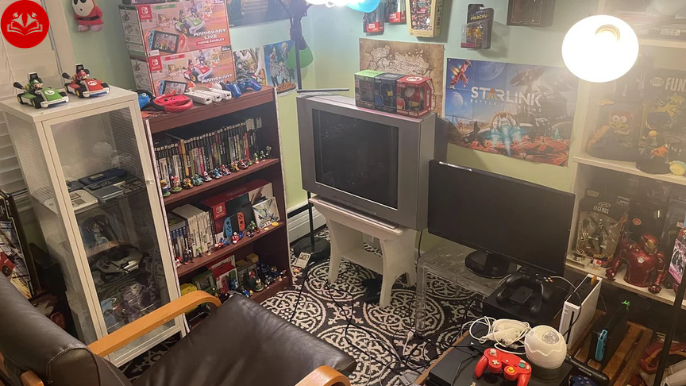
Below is the strategic breakdown.
1. Physical gaming corner
This is the visible layer:
- desk or station layout
- monitor and console/PC placement
- lighting and ergonomics
- cable management
- noise and heat control
2. Connectivity layer
This is the invisible layer that often matters more:
- router quality
- Ethernet vs Wi-Fi choice
- ISP consistency
- queue management
- nearby server routes
- interference from other devices
3. Traffic control layer
This is where many setups fail.
If your network has smart queuing or QoS configured properly, it can reduce congestion-related delay. Ubiquiti’s Smart Queues documentation specifically describes the feature as a tool to prevent bufferbloat, especially on lower-bandwidth connections.
4. Device and software layer
This includes:
- game updates
- background app control
- driver or firmware updates
- NAT/network settings
- streaming app behavior
- DNS and routing behavior in some cases
Quick reference table
| Component | What it affects | Why it matters |
| Wired Ethernet | Stability, latency, jitter | Usually more consistent than shared Wi-Fi conditions. |
| Router with smart queuing | Congestion control | Helps reduce bufferbloat under load. |
| Good Wi-Fi placement | Signal quality | Poor placement raises interference and instability. |
| Server proximity | Ping | Distance still influences delay. |
| Background traffic control | Packet loss, lag spikes | Heavy downloads and streams can hurt game traffic. |
Step-by-Step Framework
Step 1: Define the real goal
Do not start with “I want faster internet.”
Start with one of these:
- I want lower ping for competitive shooters
- I want smoother console gaming in a shared house
- I want better stream quality while gaming
- I want a café/lounge experience that feels premium
The goal changes the setup.
Step 2: Measure current performance
Before upgrading, test:
- ping/latency
- jitter
- packet loss
- upload stability
- performance during peak home usage
A setup with acceptable speed but poor consistency often needs traffic management more than a bigger package.
Step 3: Prioritize wired where possible
For competitive or serious online play, wired connections remain the safest default because they are more stable and less exposed to shared-air interference than Wi-Fi. Intel still frames newer Wi-Fi generations as improving low-latency gaming, but the reason that pitch matters is simple: consistency is the problem wireless is trying to close.
Step 4: Control congestion
If multiple users share the connection, enable smart queuing or an equivalent queue management feature. This is often one of the highest-return upgrades for gaming households on modest bandwidth.
Step 5: Optimize the corner itself
A gaming corner should reduce friction, not add it.
Good signs:
- clean cable routes
- easy reach to controllers/headsets
- router not buried behind metal or thick obstacles
- minimal signal interference
- enough airflow for devices
Step 6: Separate must-have from nice-to-have
Must-have upgrades
- stable ISP
- router with decent control features
- Ethernet where practical
- background traffic discipline
Nice-to-have upgrades
- RGB or décor
- decorative lighting
- premium peripherals
- acoustic tweaks
Step 7: Create a maintenance routine
Every month, check:
- firmware updates
- unexpected background sync apps
- connection tests at busy times
- router placement
- cable wear
- new devices hogging bandwidth
Real-World Example
Imagine a four-person apartment with a 200 Mbps fiber connection.
One person plays competitive shooters. One streams 4K video. Another joins video calls. Another downloads large files.
On paper, 200 Mbps sounds fine. In reality, the gamer complains about random lag spikes every evening.
What changed?
They implement:
- Ethernet for the gaming PC
- smart queuing on the router
- scheduled cloud backups outside peak hours
- router placement away from interference
- a dedicated gaming desk area with fewer cable and device conflicts
Plausible before/after scenario
| Metric | Before | After |
| Average ping | 38 ms | 29 ms |
| Jitter | 22 ms | 6 ms |
| Packet loss during peak use | 1.5% | near 0% |
| User complaints per week | frequent | rare |
That pattern is realistic because research and vendor documentation both point to the same lesson: background traffic and queue behavior can degrade gaming performance even when headline speed looks fine.
Advanced Insights and Scenario Planning
Best case
You have fiber, a strong router, Wi-Fi 7 or wired Ethernet, smart queue management, and nearby game servers. Your setup feels immediate, stable, and scalable. Intel positions Wi-Fi 7 as a path toward lower latency and better stability for demanding environments, especially when many devices compete on the same network.
Realistic case
You cannot rebuild everything, but you can still improve a lot by:
- switching the main gaming device to Ethernet
- reducing bufferbloat
- controlling background uploads/downloads
- improving router placement
Worst case
You overspend on hardware while ignoring the network. The room looks impressive, but gameplay still suffers because the bottleneck is congestion, distance, or unstable wireless conditions.
That is the main strategic trap behind this keyword: people focus on the corner and ignore the internet.
Stage-Based Breakdown
Casual gamer
Focus on:
- stable connection
- one-click convenience
- simple router setup
- minimal troubleshooting
Competitive player
Focus on:
- wired connection
- low jitter
- packet loss monitoring
- server-region choices
- background traffic discipline
Streamer or creator
Focus on:
- upload stability
- dual-use gaming/streaming workflow
- camera/light placement
- audio isolation
- redundancy planning
Gaming café or shared gaming lounge
Focus on:
- network segmentation
- seat consistency
- traffic shaping
- maintenance workflow
- customer perception of reliability
Tools and Resources
These are the kinds of tools that fit a gaming corner zap-internet strategy:
| Tool/Resource Type | Use |
| Router with smart queuing/QoS | Reduces congestion-related lag. |
| Ethernet cabling | Improves connection consistency. |
| Wi-Fi 7-capable gear | Helps future-proof multi-device, low-latency environments. |
| Console/network diagnostics | Identifies packet loss and multiplayer issues. |
| Performance logging tools | Tracks spikes, peak-hour slowdowns, and recurring issues. |
Common Mistakes to Avoid
Mistake 1: Chasing speed only
A bigger package does not automatically mean a better gaming experience. Latency stability matters too.
Mistake 2: Ignoring background traffic
One large backup or video stream can ruin a match if traffic is unmanaged.
Mistake 3: Treating Wi-Fi as automatically “good enough”
Modern Wi-Fi is far better than older versions, but placement, interference, and congestion still matter.
Mistake 4: Investing in aesthetics before fundamentals
An attractive gaming corner is great. A broken network is not.
Mistake 5: Never testing at peak times
Many networks look fine at noon and fall apart at 9 p.m.
Expert Tips and Psychological Insights
A strong gaming corner zap-internet strategy is partly technical and partly mental.
Think in systems, not gadgets
Winning setups come from alignment, not random upgrades.
Remove uncertainty first
Players often call everything “lag,” but lag can come from:
- high ping
- packet loss
- jitter
- congestion
- server distance
- local Wi-Fi interference
The better your diagnosis, the less money you waste.
Optimize for consistency, not perfection
A stable 35 ms connection often feels better than a wildly unstable lower average. That is the practical importance of jitter.
Future Trends (2026–2030)
Several shifts are likely to make the idea behind gaming corner zap-internet more relevant, not less.
1. Smarter wireless performance
Wi-Fi 7 is being positioned around higher throughput, lower latency, and better handling of crowded, device-heavy environments, which fits gaming spaces well.
2. More cloud and hybrid gaming
The ITU’s work on cloud gaming highlights how sensitive this category is to latency, jitter, packet loss, and bandwidth. As cloud delivery grows, network quality becomes even more visible to end users.
3. Traffic-aware home networking
Features like smart queuing and gaming-aware prioritization will likely move from enthusiast tools into more mainstream networking products.
4. Experience-led setup design
Gaming corners will increasingly blend:
- creator setup
- remote social space
- streaming station
- smart home node
- entertainment hub
5. Search intent will reward clarity
Because the keyword is ambiguous today, the pages that win will be the ones that explain the term honestly and connect it to real user outcomes. ZAP Internet’s own site already ties together gaming, internet, and setup themes, but there is still room for deeper, more strategic content than a short branded explainer.
FAQ
What does gaming corner zap-internet mean?
It most likely refers to a gaming-focused setup concept connected to ZAP Internet’s gaming content and to the broader idea of building a dedicated gaming space with optimized internet performance. It does not appear to be a formal industry standard term.
Is gaming corner zap-internet a product or a setup idea?
Based on the currently visible pages, it looks closer to a site-specific concept or branded phrase than a clearly defined commercial product category.
Why is low latency important for gaming?
Low latency reduces delay between your input and the server response. For real-time gaming, latency, jitter, and packet loss all strongly affect player experience.
Is Ethernet better than Wi-Fi for gaming?
In many practical cases, yes. Wi-Fi keeps improving, especially with Wi-Fi 7, but wired Ethernet is still usually the safer choice for maximum consistency and lower interference risk.
Can router settings improve gaming performance?
Yes. Smart queuing, QoS, better placement, and limiting competing traffic can reduce lag caused by congestion and bufferbloat.
Do you need very high internet speed for gaming?
Not always. Gaming often needs stable, consistent delivery more than extreme headline speed. A lower-speed but well-managed connection can outperform a faster but congested one.
Will gaming connectivity matter more after 2026?
Yes. As cloud gaming, streaming, and multi-device households continue growing, the quality of latency handling and traffic management will matter even more.
Conclusion
Gaming corner zap-internet is one of those modern keywords that sits between a brand phrase, a search trend, and a practical setup problem. The smart way to handle it is not to force a fake definition. The smart way is to explain it as a gaming-performance setup philosophy: build a dedicated gaming space, pair it with optimized internet behavior, and focus on the metrics that actually change the experience.
That means prioritizing:
- stable connectivity over flashy specs
- latency consistency over raw speed
- network management over guesswork
- practical setup decisions over aesthetic distractions
In 2026, that is what makes the term valuable. Not the phrase itself, but the strategy behind it and more.
