



Starting a construction project in busy New York City-whether it’s a renovation for your apartment or a major commercial build-means working through a process that is highly specialized, closely managed, and strongly focused on following the rules. New York has older buildings, strict requirements, and a fast pace, so you need a team with real experience and good planning.
Professional New York Construction Services don’t just build; they handle the full system around the job so your idea becomes a real, finished space, with every beam, wire, and tile meeting NYC standards.
What Defines Professional New York Construction Services?
Professional construction services in New York stand out because they know local details inside and out-from common building styles to the complicated permit process. It’s more than physical labor; it’s smart planning, skilled work, and steady compliance with the city’s specific demands.
Typical Project Types in New York
Construction work in New York is wide-ranging. Residential projects often include:
- Kitchen renovations
- Bathroom renovations
- Full-home remodels
- Apartment combinations that join two units into one
Commercial projects often include:
- Office build-outs
- Retail space fit-outs and updates
- New multi-use development projects
No matter the size, many projects happen in older buildings with unusual structural conditions, and teams often need to limit noise, dust, and disruption in crowded areas.
Differences Between Commercial and Residential Construction
Commercial and residential projects both fall under NYC construction, but they can be very different in rules, scale, and goals.
| Area | Residential Construction | Commercial Construction |
| Typical focus | Comfort, appearance, and homeowner needs | Public safety, access rules, and business use |
| Common scale | Smaller projects (apartments, townhomes) | Larger projects (offices, stores, mixed-use) |
| Regulation style | Often tied to home improvement requirements | Often heavier DOB oversight and technical systems |
For residential work, many home improvement projects require licensing through NYC’s Department of Consumer and Worker Protection (DCWP). Commercial work is often larger, uses more complex systems, and is tightly regulated by the Department of Buildings (DOB). Because of this, many professional firms have separate teams or strong experience in one area, or both.
Role of Licensed Professionals and Skilled Trades
Professional NYC construction depends on licensed experts and skilled trades. In New York, property owners are responsible for work done on their buildings, which is why hiring qualified people matters.
Key roles often include:
- Professional Engineers (PEs) and Registered Architects (RAs) to prepare plans and file permits (sometimes with self-certification)
- DOB-licensed trades, such as Master Electricians and Master Plumbers
- Specialized license holders like Hoisting Machine Operators, Riggers, and Site Safety Professionals
These professionals help keep the work legal, safe, and high quality, while lowering the chance of expensive problems later.
What Services Are Included in a Full-Service New York Construction Firm?
A strong full-service firm supports clients through every phase, from early planning to the final sign-off.
Design and Architectural Planning
Many full-service firms offer design and architecture as part of the process through a “design-build” setup. This can make the workflow smoother because the design is created with real construction needs and budget limits in mind from the start.
The design process often includes:
- Predesign: define scope and early budget ranges
- Schematic design: general layout and overall look
- Design development: finalize details and key decisions
In New York, design-build services usually require a three-way contract between the owner, contractor, and design professional. This keeps design services separate and allows direct payment to the design professional, with some exceptions depending on the project type or entity. This structure helps address problems earlier and lowers the chance of surprises later.
Project Management and Construction Management
Strong project management holds everything together, especially in NYC. This includes scheduling, tracking the budget, managing deliveries, coordinating trades, and checking quality. Construction managers often guide work from early planning through the final steps, making on-site decisions and keeping the job moving.

General Contracting vs. Specialized Contracting
A general contractor (GC) manages the full project, coordinates trades, and keeps work aligned with plans and code requirements. For residential work in NYC, “general contractor” is often used the same way people use “home improvement contractor,” which requires DCWP licensing.
Specialized contractors handle specific trades, like:
- Plumbing
- Electrical
- HVAC
Even with a a GC running the job, these specialized subcontractors are often brought in because they hold the right licenses and focus on detailed trade work. Some firms also focus mainly on renovations and understand the common issues found in older buildings.
Material Procurement and Logistics
Space limits and constant traffic make logistics a major part of NYC construction. A professional firm manages lead times, supplier coordination, and delivery timing to avoid delays and extra costs. Some firms also provide warehousing for furniture and materials to keep the site organized and the schedule steady.
What Are the Legal and Regulatory Requirements in New York Construction?
New York City has strict rules meant to protect safety and preserve historic character. Handling these rules is a core part of professional construction services.
License and Registration Requirements
In New York, licensing is mostly handled by cities or counties, except for certain state-level licenses (such as asbestos contractors and crane operators). In NYC:
- DCWP licenses Home Improvement Contractors for residential work
- DOB issues licenses for many types of construction, alteration, and repair work, including new builds and major renovations
These licenses often require experience, insurance, and sometimes a written exam. Licensed contractors also need continuing education every two years to keep their credentials active.
Board Approvals and Permitting Processes
Many NYC projects need more than city permits. Co-ops and condos usually require building management approval, often including review by the building’s architect. Landmarked buildings may need approval from the Landmarks Preservation Commission (LPC).
Common approval paths include:
- Certificate of No Effect for some interior-only work (often faster)
- Full LPC review for facade changes (often slower)
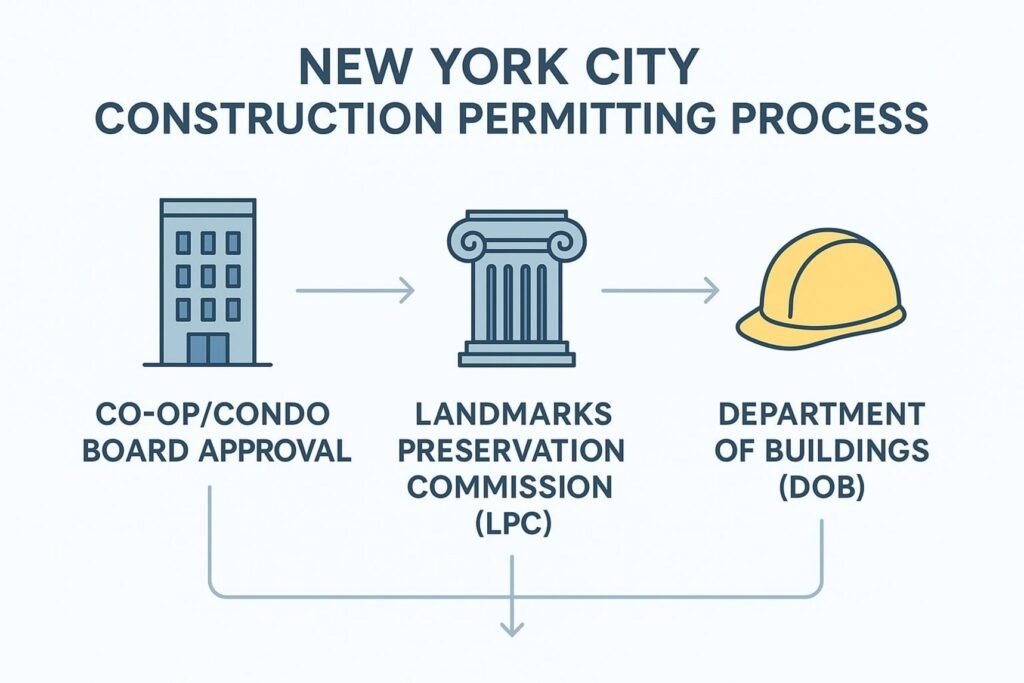
The DOB issues different types of permits after reviewing plans, such as:
- Alt-1 for projects that require a new Certificate of Occupancy
- Alt-2 for many other renovation types
Before DOB permit filings, NYC requires an asbestos report by a licensed professional, along with lab testing.
NYC Building Codes and Compliance Standards
Following the NYC Building Code and Zoning Resolution is required. Since owners are responsible for code compliance, choosing a contractor who knows these rules well is a big deal. Good compliance work helps avoid fines, stop-work orders, and costly rework, and it covers areas like:
- Structure and load requirements
- Fire safety
- Energy requirements
- Accessibility rules
Insurance and Bonding Mandates
NYC projects usually require financial protections, including:
- A Home Improvement Contractor’s Bond (often at least $20,000)
- General liability insurance
- Workers’ compensation insurance
These protections help cover accidents, damage, and other risks on a job site.
Labor Laws, Union Rules, and Safety Standards
New York has strong labor laws and union rules in many sectors. Professional construction services follow these requirements, including wage rules, work hours, and safety procedures.
Safety matters even more in NYC because of dense foot traffic and limited space. Contractors are responsible for site safety planning, regular safety talks, and making sure workers follow the rules to reduce the chance of accidents.
How Does the Construction Process Unfold in New York City?
NYC construction follows a clear sequence so teams can manage the many moving parts and still deliver results.
Pre-Construction: Consultation, Budgeting, and Timeline
Pre-construction starts with meetings to understand goals and then build early budgets and timelines. For renovation work, many firms use 3D scanning to capture existing conditions and create accurate models for design.
For NYC apartments, reviewing the building’s Alteration Agreement early is a must, since it sets building-specific rules. During design, professional firms often run regular budget reviews so cost impacts are clear before construction begins. This level of planning reduces surprises and sets expectations early.
Project Execution: Supervision, Communication, and Quality Control
After approvals are in place, construction begins with a detailed schedule and a confirmed start date. On-site construction managers help drive daily decisions and keep progress steady.
Many firms hold weekly site meetings with the client, and the design team may join to keep the build aligned with the plan. Weekly updates often include what was completed and what’s coming next. Quality checks happen throughout the job so work meets expected standards.
Finishing and Turnover: Inspections, Punch List, and Final Approvals
Near the end, the focus moves to final details and handover. The team completes final inspections and creates a punch list with remaining items to fix or adjust. The design professional confirms the work matches applicable NYC laws, codes, and rules. The contractor then helps secure the final sign-off, such as a Certificate of Occupancy or Certificate of Completion, so the project can officially close out.
What Are the Benefits of Hiring Professional Construction Services in New York?
Hiring professional NYC construction services is more than a convenience. It helps you handle the city’s unique challenges with fewer risks.
Compliance and Risk Control
NYC permits, licenses, and codes can feel overwhelming. Professional firms handle these requirements, helping keep your project compliant and lowering the risk of delays, fines, or legal issues. They also manage board approvals and safety and environmental rules.
Better Efficiency and More Reliable Timelines
Time matters in New York. Design-build firms often move faster because design and construction teams work together from the start. Strong project management helps keep workflows organized, problems solved early, and schedules realistic. For example, a design-build renovation may take 6-9 months compared to 9-12 months for a traditional design-bid-build approach.
Clear Pricing and Detailed Contracts
Professional firms use clear contracts that explain:
- Scope of work
- Materials
- Estimated start and finish dates
- Budget breakdown
- Payment schedule and how changes are handled
This clarity helps reduce surprise costs and keeps everyone accountable.
Access to Reliable Subcontractors and Vendors
Experienced NYC firms usually have strong relationships with trusted subcontractors and suppliers. This helps specialized work-like detailed electrical work or custom carpentry-get done by proven professionals. These relationships can also improve scheduling and pricing.
Common Challenges and How Professionals Address Them
NYC projects often hit obstacles. Experienced firms plan for them and respond quickly.
Handling Permits, Board, and Landmark Approvals
NYC approvals can take time and include multiple groups (DOB, boards, LPC). Professional teams like Nova Construction Services know what paperwork is needed, how to prepare it, and how to communicate with reviewers. This helps reduce approval delays and keeps the job moving.
Managing Unexpected Changes and Delays
Older buildings can hide problems, and materials can take longer than expected. Clients may also change their minds mid-project. Professional firms respond by reviewing the issue quickly and offering workable options. They also use clear change order steps so updates to scope, cost, or timing are documented and approved.
Maintaining Communication Among All Stakeholders
Construction includes many parties: owners, architects, designers, general contractors, subcontractors, building management, and city agencies. Professional firms keep communication organized through:
- A main project manager as the point of contact
- Regular site meetings
- Weekly progress reports
- Shared tools for documents and updates
This helps prevent confusion and keeps everyone aligned.
Final Thoughts on Working with Professional New York Construction Services
Working with professional construction services in New York means hiring a team that understands the city’s buildings, its strict rules, and its day-to-day challenges. Paying for experienced support often leads to a smoother process, fewer risks, and a finished result that matches your goals and holds up over time. The right team brings knowledge of local codes, experience with approvals, and the ability to manage materials, schedules, and job sites in tight urban spaces. If you choose a reputable, experienced firm, you gain peace of mind that your project-small renovation or major build-will be completed with care, compliance, and solid quality in New York City.
